Flights are booked — Boston to Anchorage and back. The rental car is reserved, pickup and drop-off both at ANC. What’s left is the part that’s actually hard: building out 11 days of itinerary and lodging, with an 8.5-year-old and a 2.5-year-old along for all of it.
Somewhere in the middle of a spreadsheet a few nights ago, I realized I was doing this trip the way I’d run a POV — mapping dependencies before committing to anything, and risk-mapping what could derail a day before it happens, instead of just listing places we’d like to see.
The real constraints
A wish list of glaciers and hikes isn’t a plan. What actually shapes the plan:
- Two very different kids. An 8.5-year-old who can handle a full day of activity but has a limit on back-to-back “boring” driving days, and a 2.5-year-old whose entire day can be derailed by a missed nap. These aren’t soft preferences — they’re closer to hard requirements the whole itinerary gets built around.
- Weather. A lot of what makes Alaska worth visiting is weather-dependent — glacier viewing, certain hikes, wildlife spotting. Every day built around one of these needs a fallback, the same way a POV needs a plan B when a customer’s environment doesn’t cooperate.
- Food. My wife is vegetarian, which means meals aren’t a detail to figure out on the fly — it’s its own planning thread running alongside lodging and activities, especially in smaller towns where options might be limited.
- Pacing. Don’t stack busy days back to back. We’re deliberately interspersing full, active days with easier, low-key ones — partly for the kids to recover from long drives, partly because a trip that’s “go go go” for 11 straight days isn’t actually fun for anyone. It’s the same instinct as slowing down mid-POV to make sure everyone’s actually aligned before pushing forward — a pause now avoids a bigger problem three days later.
The itinerary
Eleven days, mostly a loop with a couple of longer legs:
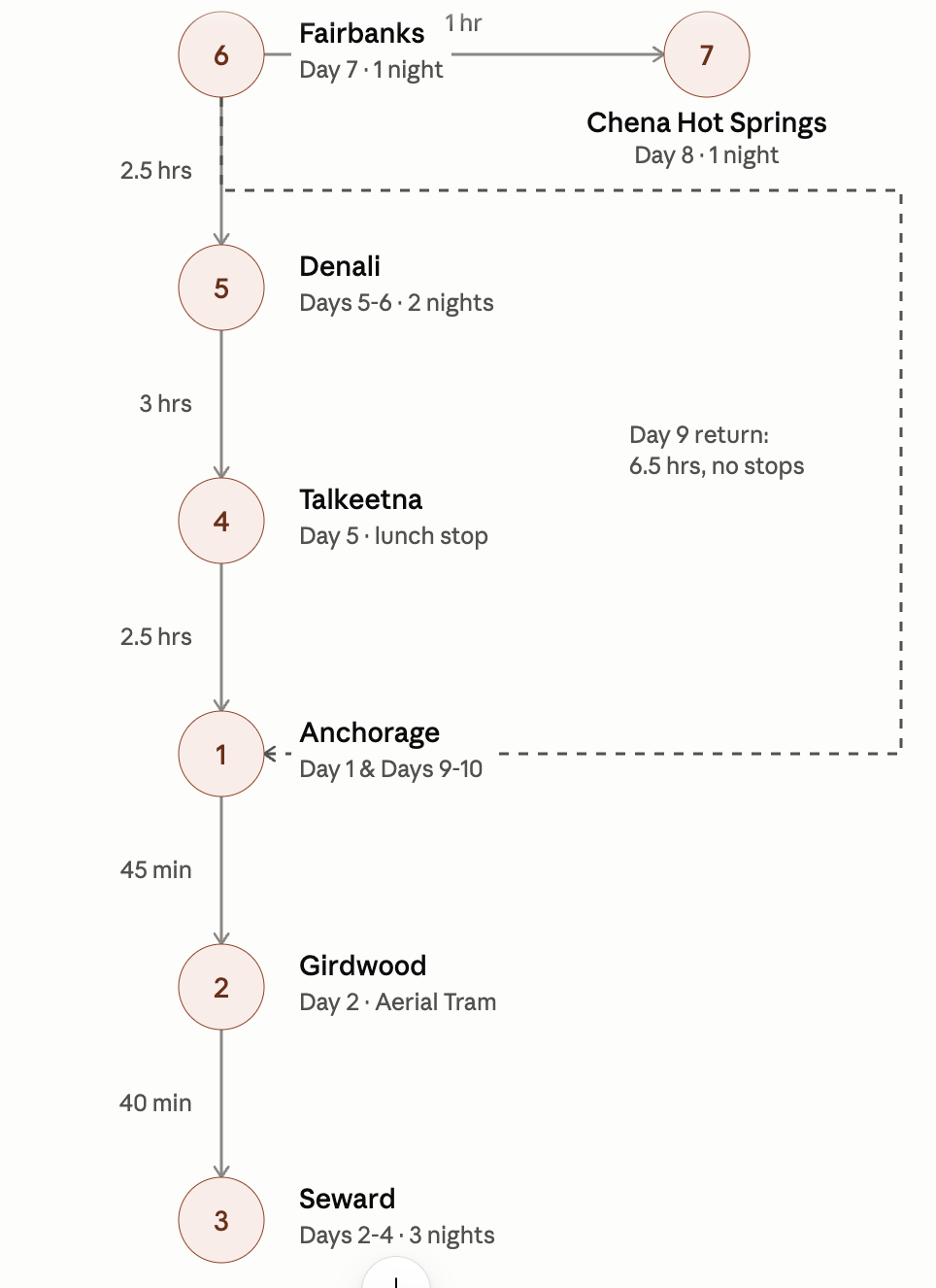
The busy/easy interspersing mostly took care of itself once the drive times were on the table. Seward gets three nights — the longest single stay on the trip, deliberately, so we’re not packing and unpacking every night right out of the gate. Denali is the other anchor stop, and the one where weather-dependent planning matters most. Chena Hot Springs is the easiest day on paper: one short drive, one clear destination, built in right after a longer stretch. And the return leg — 6.5 hours, Fairbanks straight back to Anchorage, no stops — is the one place with zero slack, which makes it the leg most likely to test the risk-mapping instinct from earlier.
That pattern wasn’t fully intentional going in; it’s closer to what the dependencies forced once we respected the driving-with-kids limit. What’s still being worked out inside this frame: exact activities per stop, and the vegetarian food situation in the smaller towns — Seward, Talkeetna, and Chena are the three where that’s going to take the most advance planning, versus Anchorage and Fairbanks where options should be easier to find on the fly.
One decision worth calling out for anyone planning something similar: you could fly out of Fairbanks instead of driving the 6.5 hours back to Anchorage. We looked at it and went with the drive — return flights out of Anchorage were cheaper than out of Fairbanks, and a lot of rental car companies charge a one-way drop-off premium if you return the car somewhere other than where you picked it up. The math didn’t favor splitting the trip that way once we added it up, but it’s a real option if your flight pricing or rental terms land differently.
Where things stand
Flights and car are done. The route above is close to final, activities still getting filled in. I’ll write the second half of this once we’re back — what the plan looked like on paper versus what 11 days in Alaska with two kids actually turned into. My guess going in: the plan survives contact with day one, and not much past it.